
Geopolitics in tension: how the crisis between Venezuela and the US impacts Colombian markets and businesses
What is happening and why does it matter to the global economy and to Colombia?
FOREIGN TRADE
1/9/20263 min read
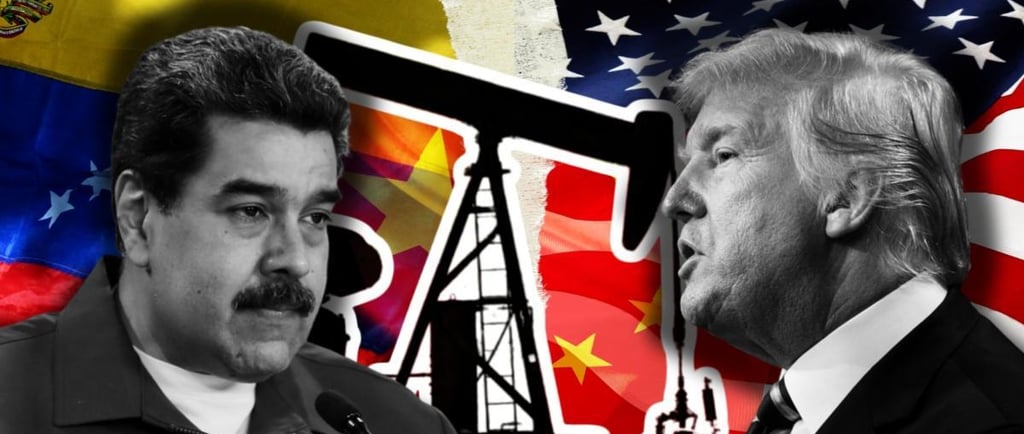
1) The current situation: a geopolitical conflict that escalated
Since late 2025 and early 2026, the relationship between the United States and Venezuela has gone from diplomatic tensions and economic sanctions to a very unusual and complex situation at the international level:
The United States captured and removed Nicolás Maduro from power following a military operation in Venezuela.
Following this event, Washington has sought to control and manage the sale of Venezuelan crude, even negotiating the export of 30–50 million barrels to US refineries.
This strategy is part of an attempt to use Venezuela's oil reserves to influence global crude oil prices and counter the influence of Russia and China.
At the same time, the Venezuelan economy faces a severe crisis under economic blockade measures and sanctions, bringing the country to the brink of financial insolvency.
2) Impact on energy markets and the global economy
Although Venezuela has the world's largest proven oil reserves, its actual production has historically been low due to decades of mismanagement, lack of investment, and sanctions.
This has several consequences:
For the global oil market:
Venezuela is no longer a major oil supplier (it produces only about 1% of the global supply due to the collapse of its industry).
However, the conflict, including the uncertainty surrounding its oil and export routes, raises the perception of geopolitical risk in the energy market, which can drive price volatility even if actual production is low.
If large-scale exports resume under agreements with the US, it could alter long-term crude oil flows, putting upward or downward pressure on prices depending on how supplies are redistributed.
For the global economy:
Geopolitical tensions, sanctions, and potential blockades contribute to an environment of global economic uncertainty, which limits projected growth (as part of a broader context of trade tensions).
Investors often seek refuge in assets such as gold or safe bonds, which can disrupt global capital flows and make credit more expensive.
3) Why does this matter to Colombia?
Colombia is affected in several ways, both economic, social and strategic:
a) Trade and energy
Although Colombia does not depend directly on Venezuelan oil, the dynamics of the regional oil market do have repercussions:
Changes in the supply of heavy crude (such as Venezuelan crude) can impact the price of oil in refineries and regional markets, which in turn influences fuel prices and Colombia's energy competitiveness.
The movements of large importers/partners (such as the US or China) can redistribute trade and energy flows, forcing adjustments.
b) Migration and employment
Colombia has been home to millions of Venezuelans for years; according to previous data, more than 2.5 million Venezuelans reside in the country.
The intensification of the economic crisis and sanctions in Venezuela, although with humanitarian nuances, continues to generate migratory pressures, impacting public services, employment and social demand in border areas.
c) Security and diplomatic relations
The regional conflict has strained Colombian foreign policy, forcing Bogotá to balance relations with the U.S., regional actors, and its sovereign stance regarding Venezuela.
The regional conflict has strained Colombian foreign policy, forcing Bogotá to balance relations with the U.S., regional actors, and its sovereign stance regarding Venezuela.
4) What should business owners and productive sectors know?
1. Diversification of business risks
Increasing geopolitical volatility underscores the importance of not being overly dependent on a single market or input supplier.
2. Scenarios in energy and prices
Although Venezuela is not a major oil player today, political changes could open up new opportunities or risks for energy and fuel prices in the region.
3. Financial markets sensitive to stress
Investors and companies should prepare for fluctuations in interest rates, currencies, and working capital depending on the course of the conflicts in the region.
4. Migration and the labor market
Sectors that employ labor in border areas must consider the ongoing effects of migration on wages, social costs, and logistics.